

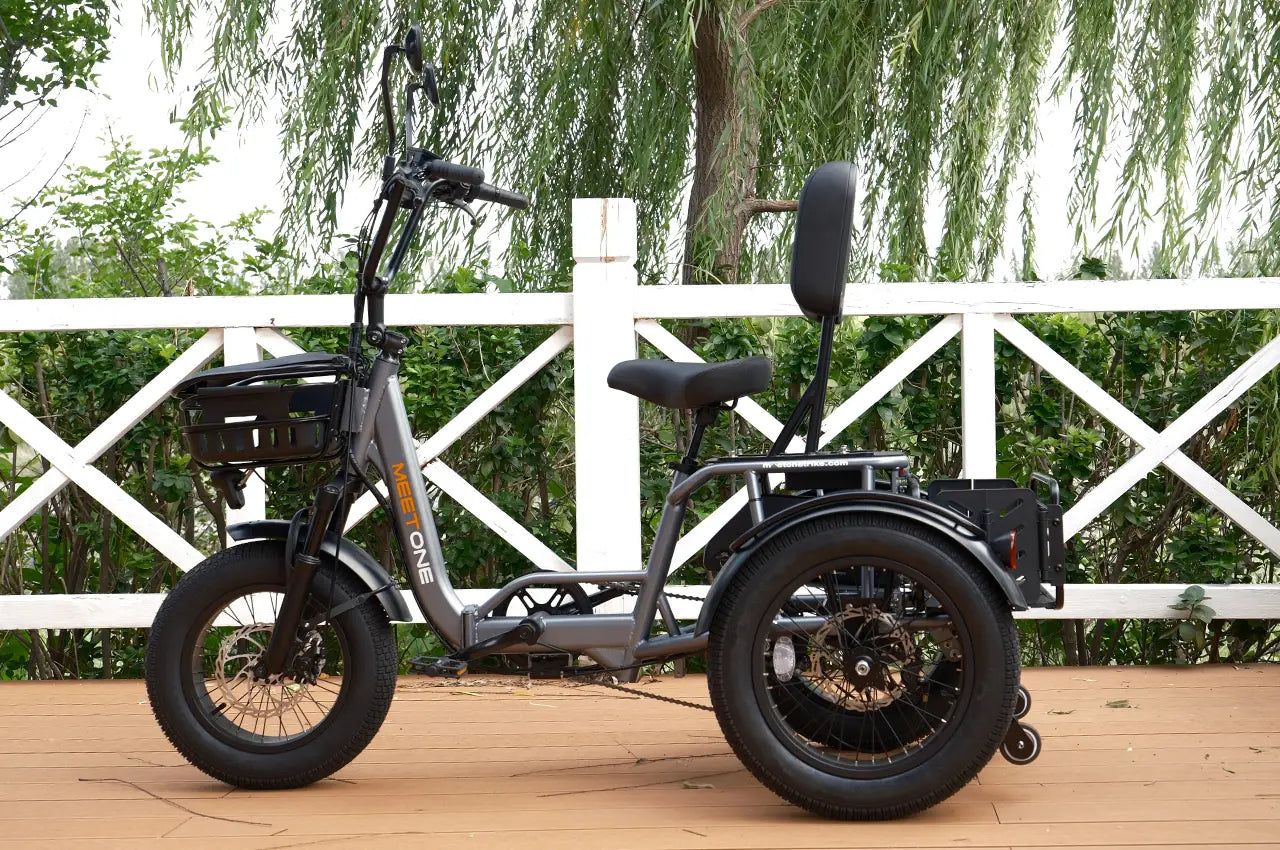
Editor’s note: The original Meet One Breeze Electric Trike has been discontinued and replaced by the newer Breeze 2.0 series. This article is kept as an older-model archive for readers who want to understand why the original Breeze was popular with seniors. For current specifications, pricing, and availability, please visit the Breeze 2.0 product page or read our updated Breeze 2.0 guide.
The original Meet One Breeze Electric Trike was designed for seniors who wanted a more stable, comfortable, and confidence-friendly way to ride. With three wheels, electric assist, a supportive backrest, a folding frame, and a relaxed semi-reclined riding position, it helped many riders enjoy cycling without the balance demands of a traditional two-wheel bike.
Today, the original Breeze has been replaced by the upgraded Meet One Breeze 2.0 series. If you are currently shopping for an electric trike for seniors, we recommend starting with Breeze 2.0 instead of relying only on the older Breeze specifications below.
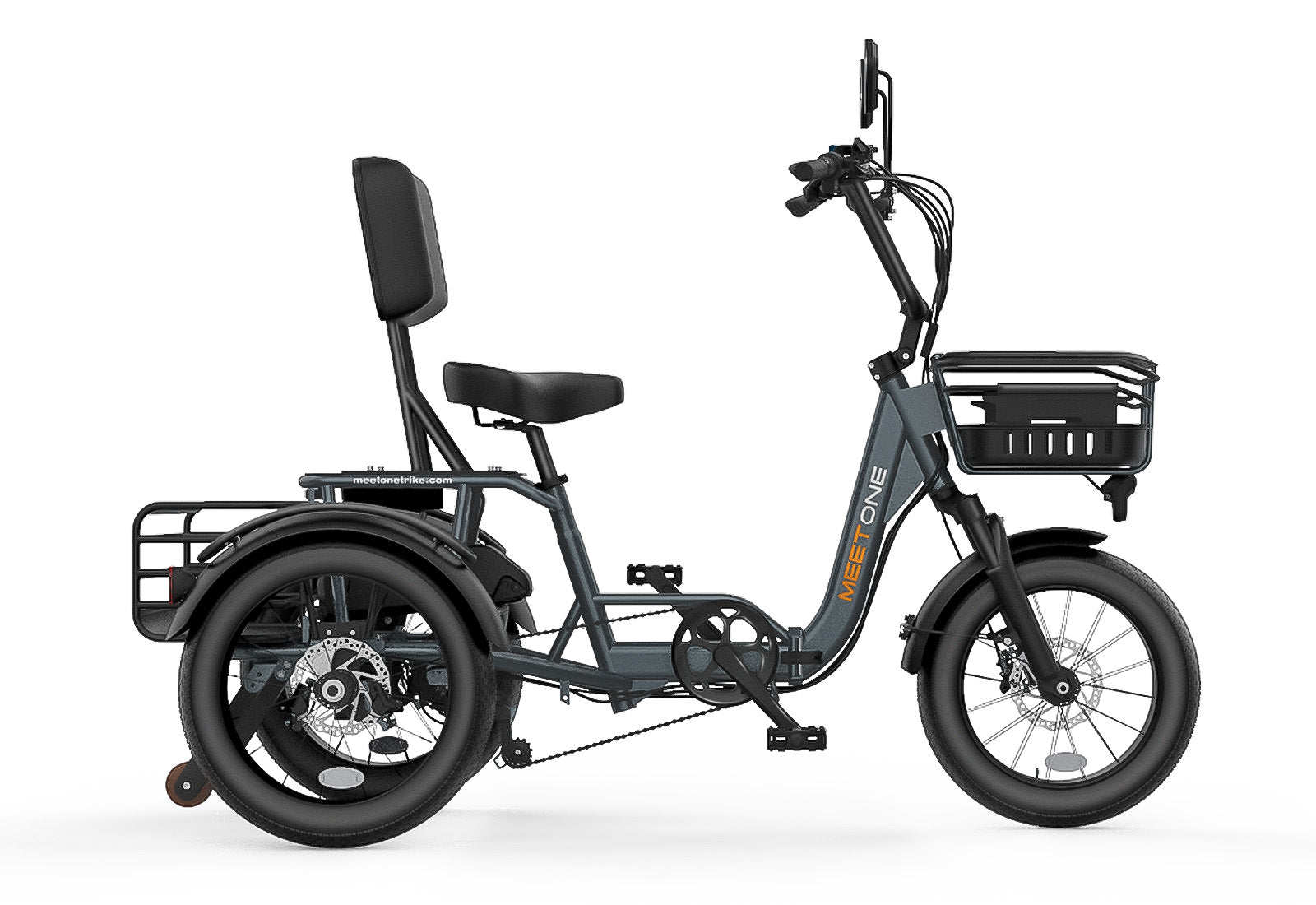
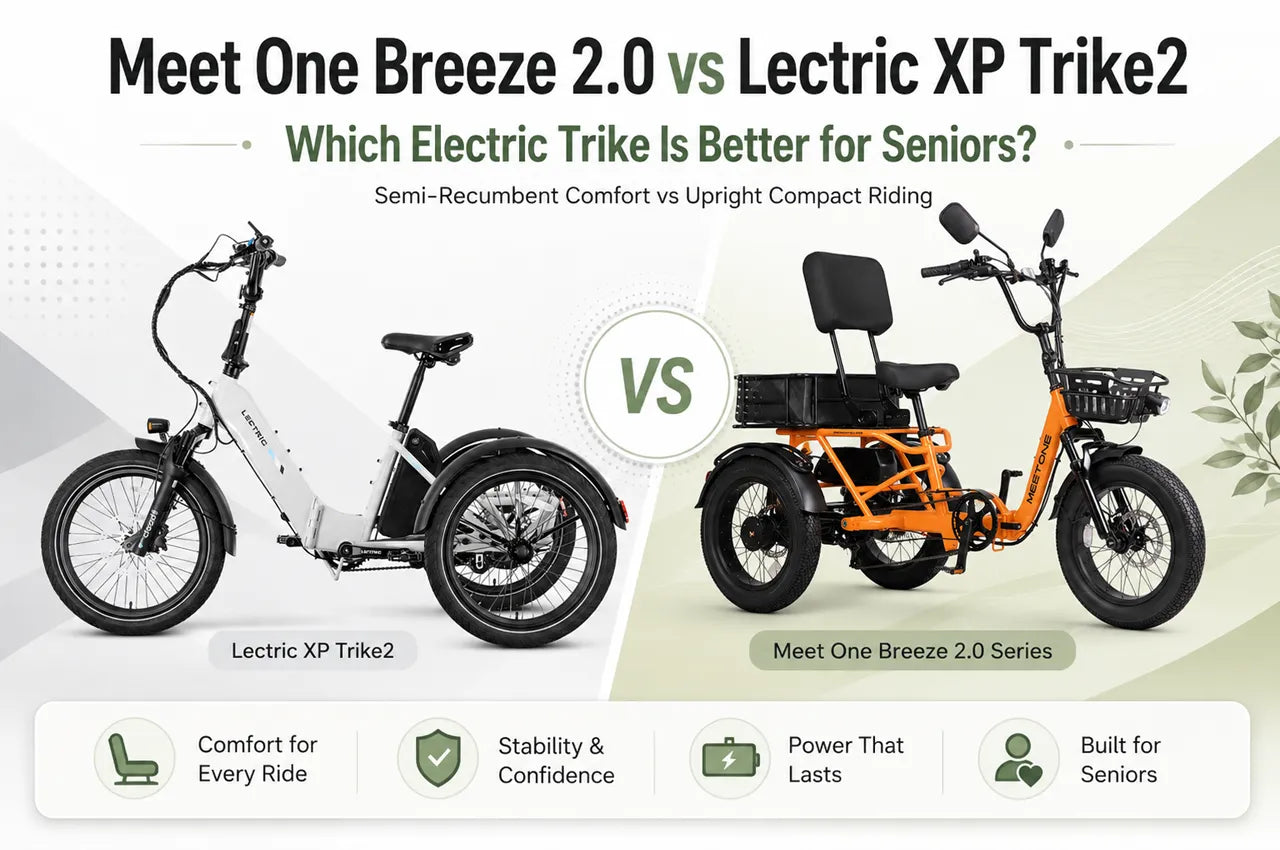
Meet One Breeze 2.0 Series for Seniors
Semi-recumbent comfort design
Supportive seat with backrest
Electric assist for easier riding
Reverse mode for tight spaces
Folding electric trike design
Built for everyday errands, neighborhood rides, and senior comfort
For current pricing, colors, availability, and specifications, please check the official product page.
Why the Original Breeze Was Popular with Seniors
The original Breeze became popular because it addressed several common senior riding concerns at once: balance, comfort, confidence, electric assist, storage, and ease of use. It was not designed to feel like a fast, aggressive e-bike. It was designed to make everyday riding feel easier and more approachable.
For seniors who had stopped riding traditional bikes because of balance concerns, joint discomfort, or fear of falling, the Breeze offered a calmer way to get back outside and enjoy short trips, local paths, errands, and recreational rides.
Original Breeze vs Breeze 2.0 Series: What Changed?
The original Breeze helped define Meet One’s senior-friendly electric trike design. The newer Breeze 2.0 series builds on that comfort-first idea with a more current model platform and updated product availability.
| Feature | Original Breeze | Breeze 2.0 Series |
|---|---|---|
| Status | Discontinued older model | Current upgraded Breeze model series |
| Riding position | Semi-reclined comfort posture with supportive backrest | Semi-recumbent comfort design with updated ride feel |
| Senior use case | Balance support, casual rides, errands, and confidence-building | Senior comfort, daily errands, longer rides, and mixed neighborhood surfaces |
| Comfort focus | Cushioned seat, backrest, and relaxed riding posture | Comfort-first semi-recumbent layout with current model options |
| Availability | No longer the current Breeze model | View Breeze 2.0 |
Note: This page discusses the original Breeze model for archive and comparison purposes. For current pricing, availability, range, battery options, and specifications, please refer to the latest Breeze 2.0 product page.
1. Stability: Less Worry About Balancing
One of the biggest reasons seniors considered the original Breeze was stability. Traditional bicycles require constant balance, which can become more difficult with age, reduced leg strength, or less confidence on two wheels.
The original Breeze used a three-wheel layout to help reduce that balance concern. Riders could move at slower speeds, come to a stop more comfortably, and enjoy a more planted ride compared with a traditional bicycle.
Like any electric trike, it still required safe handling. Riders should slow down before turns, avoid sharp cornering, and practice in an open area first. But for many seniors, three wheels made riding feel more approachable.
2. Electric Assist: Easier Riding for Hills and Longer Trips
Electric assist was another important benefit. Many seniors want to stay active, but hills, headwinds, and longer distances can make cycling feel intimidating. The original Breeze helped by adding motor assistance when riders needed extra support.
This made it easier to ride for errands, neighborhood trips, recreational paths, and casual outings without feeling exhausted. The goal was not to replace pedaling entirely, but to make riding feel more accessible and enjoyable.
3. Confidence for Riders Returning to Cycling
Fear of falling is real, especially for riders who have not been on a bike in years. The original Breeze helped address that concern with a stable trike platform, supportive seating, electric assist, and practical control features.
For seniors who wanted to get back outside, move more, or enjoy fresh air without the stress of balancing on two wheels, this kind of electric trike offered a helpful middle ground between exercise, mobility, and recreation.
4. Comfort-First Design
Comfort was one of the strongest parts of the original Breeze. Its wide cushioned seat and supportive backrest helped riders sit back in a semi-reclined position rather than hunching forward like on a traditional bike.
This posture could feel easier on the back, shoulders, wrists, and neck. It also made the ride feel more relaxed, especially for seniors who wanted a calm, chair-like riding experience for everyday trips.
The Breeze 2.0 series continues this comfort-focused direction with a current semi-recumbent design for today’s riders.
5. Practical for Everyday Senior Mobility
The original Breeze was not just about recreation. It was also practical. With cargo space and electric assist, it gave riders a useful option for short local trips, grocery runs, park visits, and meeting friends nearby.
For many seniors, an electric trike can support independence by making short-distance travel feel easier and more enjoyable. Instead of using a car for every small trip, riders can choose a slower, more open-air way to move around their neighborhood.
Should You Still Buy the Original Breeze?
Since the original Breeze has been discontinued, most new shoppers should start with the current Breeze 2.0 series instead. The older Breeze may still be useful as a reference point if you are researching a used trike or comparing earlier Meet One models.
For a new purchase, Breeze 2.0 is the better place to start because it is the current model series with updated availability, product information, and support.
Final Recommendation
The original Meet One Breeze Electric Trike was a senior-friendly electric trike built around stability, electric assist, relaxed comfort, practical storage, and confidence. It helped many riders understand why three wheels can make cycling feel easier and more enjoyable later in life.
However, because the original Breeze is no longer the current model, seniors and families shopping today should review the upgraded Breeze 2.0 series for the latest specifications, availability, and comfort-focused design.
FAQ
Is the original Meet One Breeze still available?
No. The original Meet One Breeze has been discontinued and replaced by the newer Breeze 2.0 series.
Why was the original Breeze popular with seniors?
Seniors liked the original Breeze because it offered three-wheel stability, electric assist, a supportive backrest, practical storage, reverse mode, and a relaxed semi-reclined riding position.
What replaced the original Breeze Electric Trike?
The Breeze 2.0 series replaced the original Breeze as the current Meet One comfort-focused electric trike line.
Is Breeze 2.0 a good option for seniors?
Breeze 2.0 is designed for riders who want semi-recumbent comfort, everyday stability, electric assist, and a more approachable riding experience for errands, neighborhood rides, and recreation.
Should I buy Breeze 2.0 instead of the original Breeze?
For a new purchase, yes. Since the original Breeze is discontinued, most shoppers should start with the current Breeze 2.0 series.
Share:
Black Friday Meet One Electric Trike Deals 2024
Recumbent Electric Trikes: A Complete Guide
2 comments
Can youget the wide arm chair seat for the Breeze 2? Does it come assembled? What is the battery life and price of a battery?
Can youget the wide arm chair seat for the Breeze 2?