


Whether you need a back rest on an electric trike depends less on the back rest itself and far more on the structural design of the trike.
When riders—especially seniors—ask if a back rest is necessary, the question often sounds simple. In reality, back rest effectiveness is determined by riding geometry, seat design, and pedal placement, not by padding alone.
A back rest only provides real support when the trike’s riding position allows the rider’s back to actively rely on it during pedaling.
Back Rests on Upright Electric Trikes
On upright electric trikes, the pedals are positioned directly underneath the seat, similar to a traditional bicycle. The rider’s posture is vertical, and most body weight is supported through the saddle and pedals.
Any back rest on this type of trike is typically a small, independent pad mounted behind the seat. It is not part of an integrated seat structure and is not designed to carry sustained load during active riding.
Because the rider remains upright and forward-balanced while pedaling, the back does not naturally rest against this pad for extended periods. As a result, this style of back rest provides limited functional support during riding.
It may offer brief contact while coasting or stopping and can create a sense of reassurance, but it does not meaningfully support the rider’s back throughout the ride. For this reason, riders on upright trikes often experience little difference in comfort with or without this type of back rest.
Why Back Rests Work on Semi-Recumbent Electric Trikes
The situation changes completely on semi-recumbent electric trikes, where the pedals are positioned forward of the seat. This riding geometry naturally places the rider in a reclined posture and shifts part of the body weight backward rather than straight down.
In this configuration, the back rest becomes a functional, load-bearing component of the riding position. The rider’s back remains in continuous contact with the back rest while pedaling, allowing it to support the torso, stabilize posture, and reduce strain on the lower back and core muscles.
This is why semi-recumbent trikes are often considered significantly more comfortable for longer rides, particularly for seniors or riders with back sensitivity. The support is constant and intentional rather than occasional or passive.
Integrated Seat Backs vs. Add-On Back Rests
Another critical factor is how the back rest is mounted.
On many semi-recumbent trikes, the back rest is integrated into the seat itself or securely mounted to the rear frame. This creates a rigid support structure that maintains consistent alignment and is designed to handle sustained pressure during pedaling.
This is fundamentally different from add-on back rests attached to upright saddle posts. Integrated or frame-mounted back rests are built to provide continuous support and can genuinely improve comfort and reduce fatigue over longer rides.
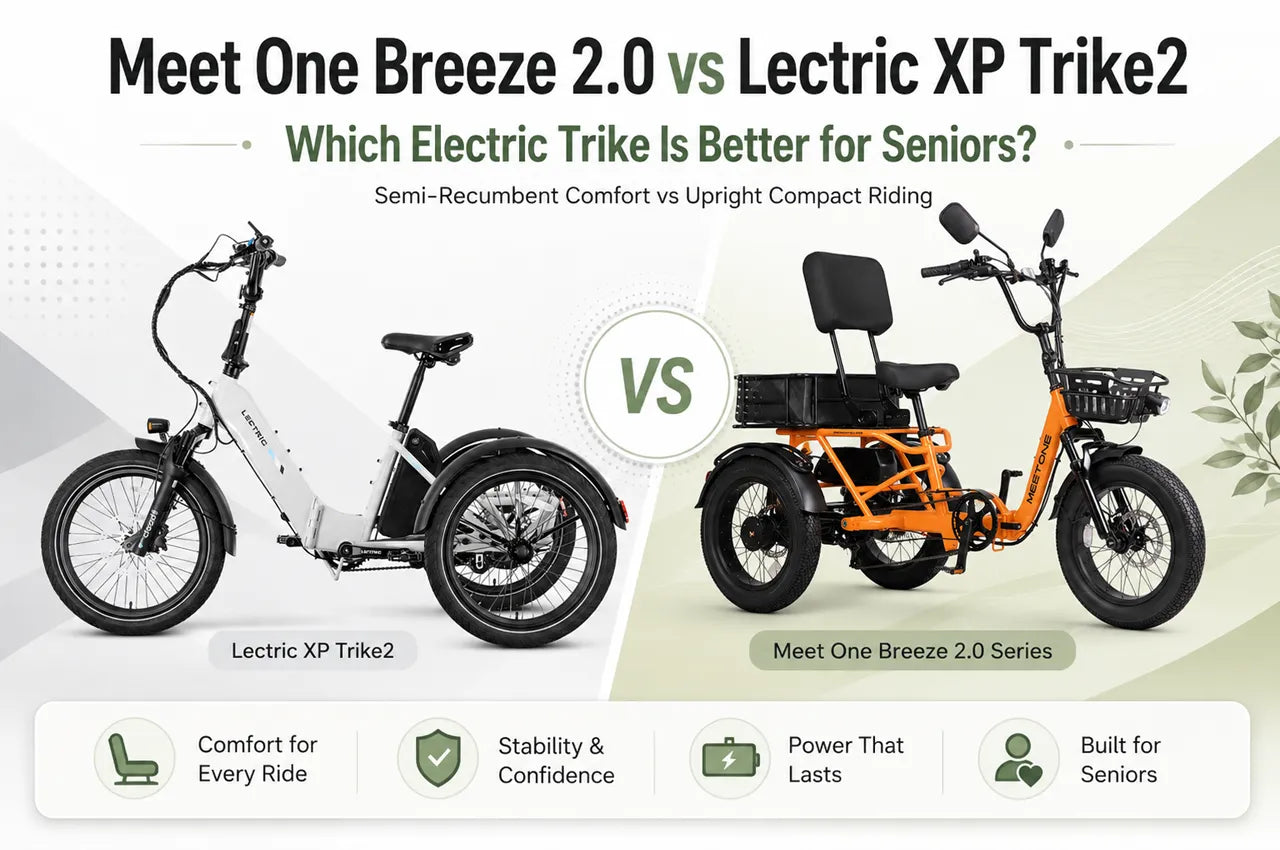
Meet One's trikes are designed entirely around this semi-recumbent concept. Their widened back rests are mounted to the rear frame, allowing them to provide continuous support throughout the ride. Meet One seats can also be upgraded to a fully integrated seat-back design for additional upper-body support.
Comfort Comes From Structure, Not Padding
It is a common misconception that adding a back rest automatically makes a trike more comfortable. Comfort comes from how the rider’s body interacts with the entire riding structure—seat position, pedal placement, back support, and weight distribution working together.
On upright trikes, even a padded back rest cannot change the riding posture. On semi-recumbent trikes, the structure encourages the rider to lean back, making the back rest an essential part of the riding experience rather than an optional accessory.
Final Thoughts
Do you need a back rest on an electric trike? The more accurate question is whether the trike’s design allows a back rest to actually do its job.
On upright trikes, a back rest offers minimal functional benefit during riding. On semi-recumbent trikes with forward-mounted pedals, the back rest becomes a core component of comfort, posture, and long-term ride enjoyment.
Understanding this structural difference is key to choosing the right electric trike, especially for riders who prioritize comfort, stability, and sustained support over longer rides.

Share:
How to Ride an Electric Trike
Why Does Riding A Semi-recumbent E-trike Feel More Stable?