

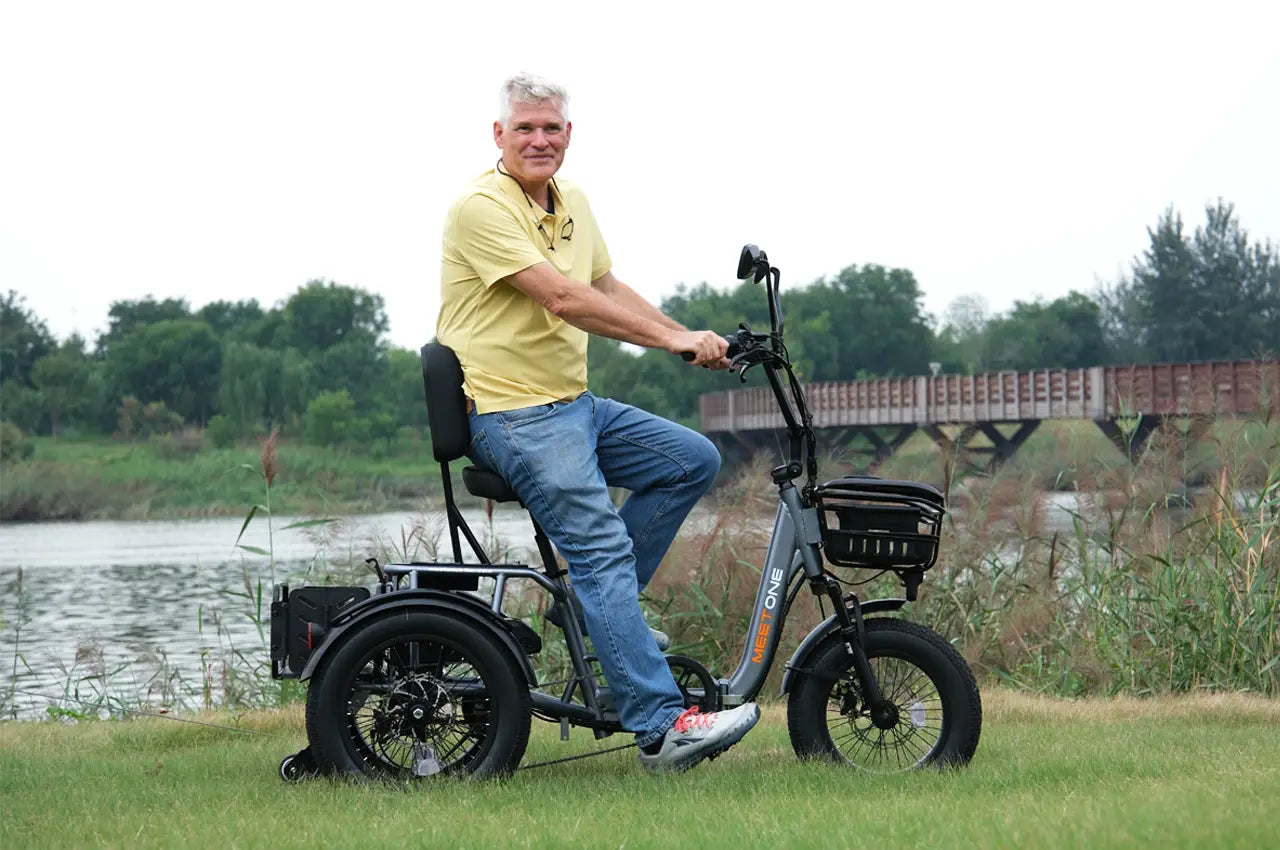
Updated guide: This article has been refreshed to focus on current electric trike buying advice. Older Breeze model pricing and links have been removed. For current specifications, colors, availability, and promotions, please check the latest Meet One Breeze 2.0 product page.
Choosing an affordable and practical electric trike is not about buying the cheapest model you can find. A good electric trike should fit your daily routine, feel stable at low speeds, offer enough range for your rides, and provide the comfort and control you need for errands, neighborhood trips, and everyday mobility.
For most shoppers, the best value comes from balancing price, comfort, battery range, motor support, braking, storage, and long-term usability. This guide explains what to look for before buying and why the current Meet One Breeze 2.0 series is a practical option for riders who want comfort-focused value.
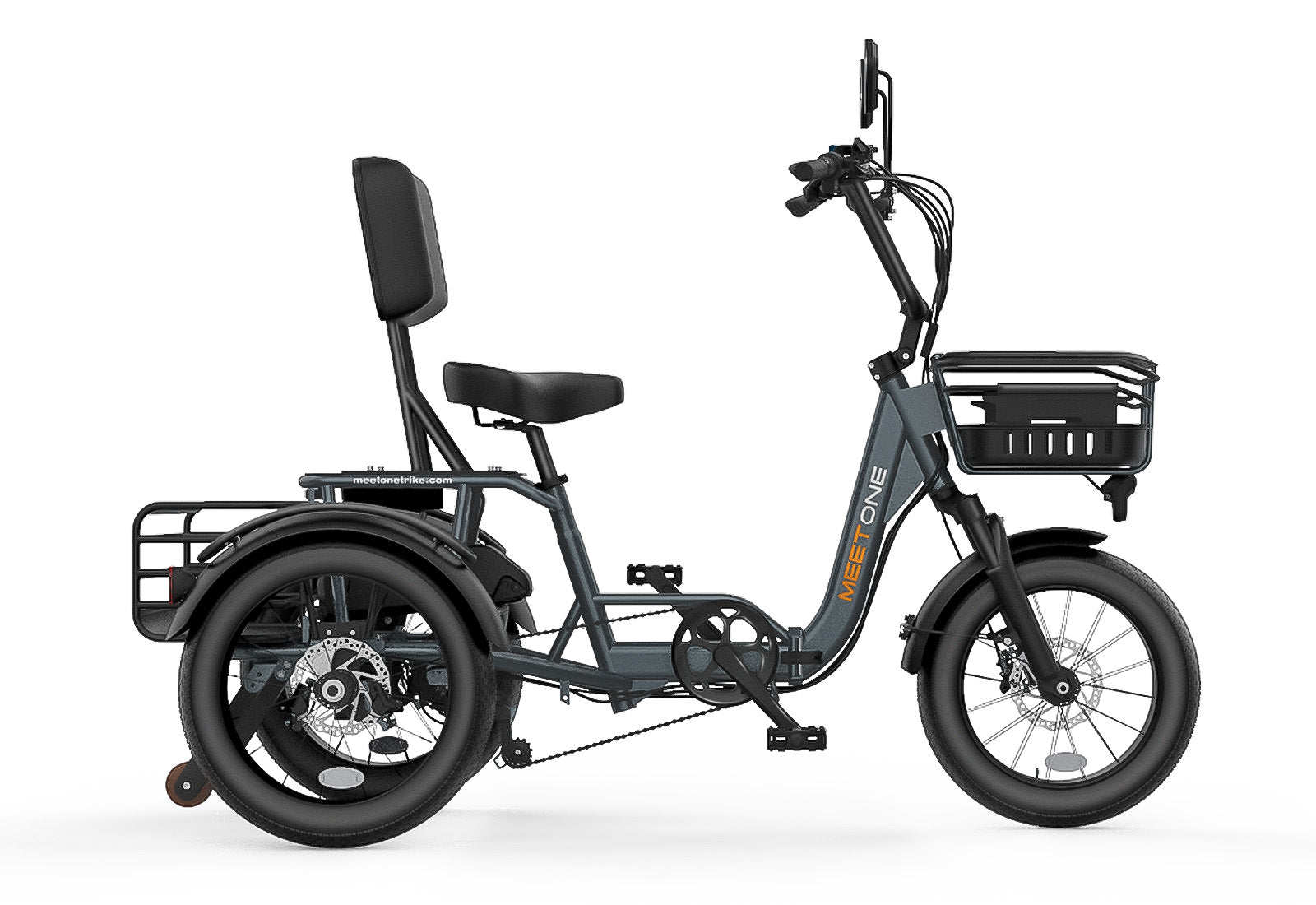
Meet One Breeze 2.0 Series
Semi-recumbent comfort design
Supportive seat with backrest
Electric assist for everyday riding
Reverse mode for tight spaces
Folding electric trike design
Built for errands, neighborhood rides, senior comfort, and practical daily use
For current price, available colors, range, battery options, and promotions, please check the official product page.
How to Choose an Affordable and Practical Electric Trike
Affordable electric trikes usually involve trade-offs. Some models focus on a lower price but use smaller batteries, simpler braking systems, or less comfortable seating. Others cost more but offer better comfort, range, suspension, or cargo capacity. The key is to decide which features matter most for your actual use.
A practical electric trike should answer a simple question: Will this make my daily rides easier, safer, and more comfortable? If the answer is yes, it may be worth paying slightly more for the right design rather than choosing the lowest price.
Quick Buying Checklist
| Factor | What to Look For | Why It Matters |
|---|---|---|
| Use case | Errands, short commutes, parks, neighborhood rides, or longer recreational trips | Your main use determines how much range, comfort, storage, and power you actually need. |
| Battery and range | Enough battery capacity for your normal route, plus some extra range for unexpected trips | A slightly larger battery can reduce charging anxiety and make the trike more useful day to day. |
| Motor support | Reliable electric assist for hills, headwinds, and heavier loads | The motor should help without feeling too aggressive or difficult to control. |
| Comfort | Supportive seat, backrest, relaxed riding position, and easy mounting | Comfort is one of the biggest factors for seniors and everyday riders. |
| Brakes | Disc brakes with reliable stopping power; hydraulic brakes are smoother but usually cost more | Good braking matters more on a heavier trike, especially with cargo or hills. |
| Storage | Front basket, rear basket, or cargo-friendly frame design | A practical trike should help with groceries, bags, daily items, and short errands. |
| Foldability | Folding frame if you need to store the trike in a smaller space | Foldability is useful, but check the total weight before assuming it will be easy to lift. |
1. Start with Your Riding Needs
Before looking at motors or batteries, think about how you will actually use the electric trike. A rider who only needs short neighborhood trips does not need the same setup as someone who plans to ride longer distances, carry groceries, or travel over rough pavement.
If you mainly want an electric trike for short errands, parks, and casual rides, focus on comfort, stability, braking, and easy handling. If you plan to ride longer distances, battery capacity and seat comfort become more important.
Seniors and riders with limited mobility should also pay close attention to step-through height, riding posture, seat support, and whether the trike feels easy to control at low speeds.
2. Battery and Range: Do Not Buy Only by the Biggest Number
Battery capacity has a major impact on range, but real-world range depends on many factors, including rider weight, terrain, wind, tire pressure, cargo, riding speed, and pedal assist level.
For short local rides, a moderate battery may be enough. For longer trips or riders who do not want to charge often, choosing a larger battery or a model with extended-range options can make the trike more practical.
The best approach is to estimate your normal daily distance, then choose a trike with more range than you think you need. That extra buffer helps when riding into wind, climbing hills, or carrying cargo.
3. Motor and Power: Look for Usable Support
Affordable electric trikes often use motors in the 500W to 750W range. For many riders, that is enough for neighborhood streets, errands, and moderate hills.
More power is not always better if the assist feels jumpy or difficult to control. A practical trike should feel predictable when starting, turning, slowing down, and riding in shared spaces.
Rear-drive motors can provide helpful traction for everyday riding, while other motor layouts may feel different depending on terrain and load. The right choice depends on your route, your comfort level, and how much assistance you need.
4. Comfort and Design Matter More Than You Think
Comfort is one of the biggest differences between a trike you use every week and a trike that sits unused. Look for a supportive seat, backrest, ergonomic handlebars, and a riding position that does not force you to hunch forward.
For many senior riders, a semi-recumbent or semi-reclined riding position can feel more relaxed than a traditional upright bicycle posture. It can help riders sit back, reduce upper-body strain, and enjoy a calmer ride.
This is one of the reasons the Meet One Breeze 2.0 series is worth considering. It is built around comfort-first riding, with a supportive seated posture and practical everyday design.
5. Weight and Foldability: Be Realistic
Foldability is useful, especially if you need to store your trike in a garage, apartment, RV, or tight storage area. But folding does not always mean easy to lift.
Electric trikes are heavier than regular bicycles because they include a motor, battery, stronger frame, wheels, and cargo features. A heavier trike can feel stable on the road, but it may be harder to carry or load into a vehicle.
If storage is important, look for a folding frame. If lifting is important, check the actual weight and think about whether you will have help moving it.
6. Brakes and Safety Features
Braking is especially important on electric trikes because they are heavier than standard bikes and may carry cargo. Mechanical disc brakes are common on value-focused models and can be cost-effective. Hydraulic disc brakes usually feel smoother and stronger but often raise the price.
Beyond brakes, look for practical safety features such as lights, reflectors, parking brake support, reverse mode, and a stable frame design. These features can make everyday use easier, especially for seniors or riders using the trike for errands.
Riders should also remember that electric trikes handle differently from two-wheel bikes. Always slow down before turns, avoid sharp cornering, and practice in an open area before riding near traffic or pedestrians.
Recommended High-Value Option: Meet One Breeze 2.0 Series
If you are looking for an affordable and practical electric trike, the Meet One Breeze 2.0 series is a strong option to consider. It is designed for riders who care about comfort, everyday usability, and a more relaxed riding position.
Breeze 2.0 is especially suitable for riders who want a comfort-focused electric trike for errands, short commutes, neighborhood rides, parks, and practical daily mobility. Its semi-recumbent design, supportive seat, reverse mode, and folding layout make it a useful choice for adults and seniors who want a trike that feels approachable and easy to live with.
As with any electric trike, you should check current specifications, pricing, and configuration options before buying. Product details can change by model year, promotion, and availability.
How to Balance Price and Quality
A low price is attractive, but a practical electric trike should still feel safe, comfortable, and durable enough for regular use. Instead of chasing the cheapest option, focus on value.
Buy for your real route: If you mostly ride short distances, you may not need the biggest battery. If you ride hills or carry cargo, stronger motor support and better braking become more important.
Prioritize comfort: A supportive seat, backrest, and relaxed riding posture can matter more than small spec differences, especially for seniors.
Check current offers: Seasonal promotions can make a better-equipped trike more affordable. Always check the current product page before making a final decision.
Compare support and availability: Replacement parts, customer service, warranty coverage, and clear product documentation are part of the real value.
Final Recommendation
Choosing an affordable and practical electric trike comes down to finding the right balance between price, comfort, battery range, motor support, braking, and everyday usability.
If you value comfort, stability, practical storage, and a relaxed riding position, the Meet One Breeze 2.0 series is a strong place to start. It is designed for real-life use: errands, neighborhood rides, parks, senior mobility, and everyday confidence.
FAQ
What is a good affordable electric trike?
A good affordable electric trike should offer enough range for your daily rides, reliable braking, a comfortable seat, stable handling, practical storage, and support from a brand that provides clear product information.
How much should I spend on a practical electric trike?
Many value-focused electric trikes fall in the lower-to-mid price range, but the right budget depends on your riding needs. Comfort, battery capacity, braking, and support are often worth paying attention to instead of choosing only by the lowest price.
Is Breeze 2.0 a practical electric trike for seniors?
Yes. Breeze 2.0 is designed for riders who want semi-recumbent comfort, electric assist, practical storage, and a more approachable riding experience for errands, neighborhood rides, and recreation.
Should I choose a folding electric trike?
A folding electric trike can be useful if you need to save storage space. However, electric trikes are still heavy, so check the total weight before assuming it will be easy to lift or transport.
What matters most when choosing an electric trike?
The most important factors are your riding needs, comfort, battery range, motor support, braking, stability, storage, and whether the trike feels easy to use in your daily routine.

Share:
Recumbent Electric Trikes: A Complete Guide
Why the Meet One Tour is the Best Electric Trike for Adults