

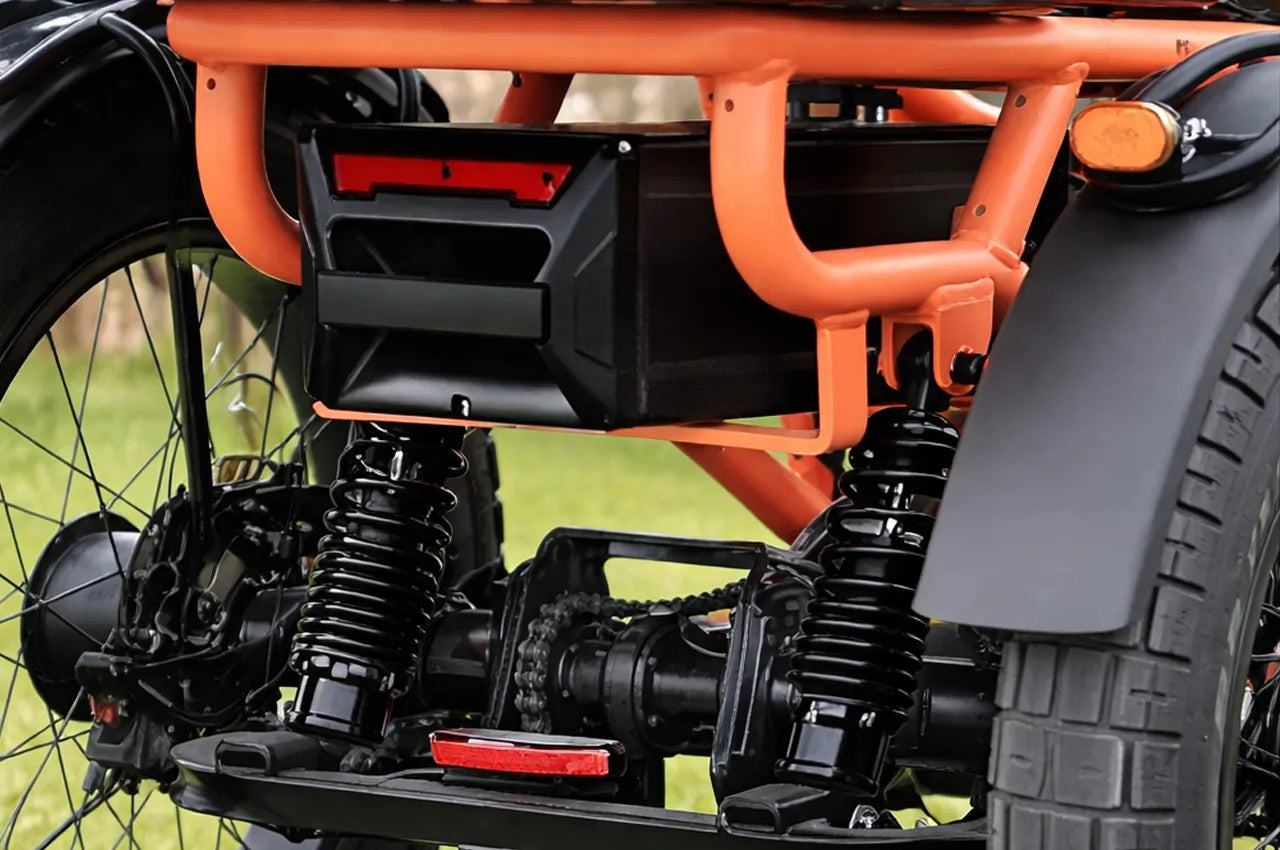
One of the biggest upgrades from the TR to the Meet One Tour 2.0 is the move to a 50Ah battery.
The benefit is easy to understand: more range, fewer charging stops, and more freedom to use your trike for longer rides, heavier errands, and more day-to-day utility.
But a bigger battery does more than extend range. It also changes the way the trike feels on the road and how the battery should be treated over time. More capacity means more weight, different braking behavior, and a few new best practices for charging, storage, and routine checks.
Because this is an official Meet One upgrade, the system is built to support it. Even so, getting the best experience from the Tour 2.0 still comes down to smart riding habits and proper battery care.
Here’s what every Tour 2.0 rider should know.
To see how the 50Ah system is integrated into the full design, you can take a closer look at the Meet One Tour 2.0 etrike here.
1. A Larger Battery Changes the Ride Feel
Moving to a 50Ah battery changes the physical feel of the trike. The biggest reason is simple: a larger battery adds weight.
That added weight affects inertia, which means the Tour 2.0 may take longer to slow down than a lighter setup. It can also change how the trike feels in corners, especially when the battery weight is concentrated under the seat or toward the rear.
This does not mean the Tour 2.0 is harder to ride. It means riders should expect a more planted, heavier feel and adjust accordingly.
What to keep in mind
- Brake earlier than usual. A heavier setup needs more distance to stop smoothly.
- Take corners at lower speeds. Extra weight can make the trike feel heavier in turns.
- Avoid aggressive maneuvers when fully loaded. The effect becomes more noticeable with cargo or additional rear load.
2. Tire Pressure Matters More with a 50Ah Setup
When battery weight goes up, tire setup becomes more important.
A heavier system puts more strain on the tires, especially if the trike is also carrying cargo or being used for more demanding daily riding. If tire pressure is too low, the ride can feel sluggish, rolling resistance can increase, and tire wear can happen faster than expected.
Checking tire pressure is one of the easiest ways to keep the Tour 2.0 riding the way it should.
What to do
- Check tire pressure weekly.
- Keep the tires within the recommended PSI range.
- If you are carrying more load, keep pressure toward the higher end of that range.
3. Use the Right Charger for the 50Ah Battery
A larger battery needs the right charging setup.
That is why Tour 2.0 riders should only use the official charger designed for the 50Ah system. Using an older charger that was intended for a smaller battery can lead to very long charging times and may put unnecessary stress on the charging process.
The correct charger is part of the system. Using the right one helps support charging performance, battery health, and long-term reliability.
What to do
- Use only the official Meet One charger for the 50Ah battery.
- Do not substitute an older lower-capacity charger for daily charging.
See how the Tour 2.0 fits real-world riding →
4. Follow the Cool-Down Rule
Battery temperature matters, especially on a larger-capacity system.
After a long ride, the battery may already be carrying heat from normal operation. Plugging in immediately can stack charging heat on top of riding heat, which is not ideal for long-term battery health. The same idea applies after charging is complete.
A short cool-down window is a simple habit that can help protect the battery over time.
What to do
- After a long ride, wait about 30 minutes before charging.
- After charging, wait about 30 minutes before riding again.
- This helps reduce unnecessary heat buildup in the battery system.
5. Avoid Deep Discharge as a Habit
One of the best things about a 50Ah battery is that it gives riders more room between charges. But more capacity should not turn into rougher battery habits.
Just because the Tour 2.0 can go farther does not mean the battery should be run all the way down every time. Frequently draining the battery to empty can shorten its long-term lifespan.
A healthier routine is to recharge before the battery reaches the bottom of its charge range.
What to do
- Try to recharge when the battery is around 30%.
- Avoid making 0% the normal target before every charge.
6. Stay Aware of Connectors and Electrical Hardware
The 50Ah system supports longer use and sustained power delivery, which means electrical connections matter.
Even with an official wiring harness, it is smart to stay aware of the condition of the main battery connectors. After a hard climb or a heavier ride, they should not feel unusually hot. Warm is one thing. Hot to the touch is another.
This is not about turning every rider into a technician. It is simply good ownership practice on a higher-capacity system.
What to do
- Periodically check the main battery connectors after heavier use.
- Keep terminals clean and dry.
7. Store the Battery Properly During Long Breaks
If the Tour 2.0 will be parked for a while, storage habits matter.
Leaving a large battery sitting fully charged or fully drained for an extended period can reduce long-term battery health. For longer periods of inactivity, a partial charge is the better approach.
This is especially important during winter downtime or any stretch when the trike will not be used regularly.
What to do
- If the trike will sit for more than two weeks, store the battery at around 50% to 70%.
- Keep the battery in a dry, sheltered location.
- Check it periodically during extended storage.
Quick Checklist for Tour 2.0 50Ah Riders
| Task | Frequency | Why It Matters |
|---|---|---|
| Brake test | Every ride | A heavier setup needs more stopping distance. |
| Tire pressure check | Weekly | Supports handling, efficiency, and tire life. |
| Connector check | Monthly | Sustained current can stress terminals over time. |
| Storage charge check | During long idle periods | Helps protect long-term battery health. |
Final Thoughts
The jump from the TR to the Meet One Tour 2.0 is more than a simple battery increase. The new 50Ah system is one of the upgrades that makes the Tour 2.0 more capable, more practical, and better suited for real-world riding.
More range is the headline benefit. But the best ownership experience comes from pairing that extra capacity with the right habits: braking earlier, cornering more carefully, checking tire pressure, using the correct charger, avoiding deep discharge, and storing the battery properly when the trike is not in use.
Treat the 50Ah system right, and the Tour 2.0 will reward you with the kind of long-range, everyday performance it was built to deliver.


Share:
A Side-by-Side Look at Breeze Pro & Breeze Pro 2.0
E-Bike, Upright E-Trike, or Semi-Recumbent E-Trike: Which Ride Fits You Best?
1 comment
Looking at your trikes. Love in rural town 2500 people. High desert south eastern Utah. Hills and sandy dirt terrain. Debate breeze pro 2.0 or tour lite. Big difference in price. Considering steep hills in town and out in hrs else roads. Suggestions on which bike. Active 70 yr old female.