

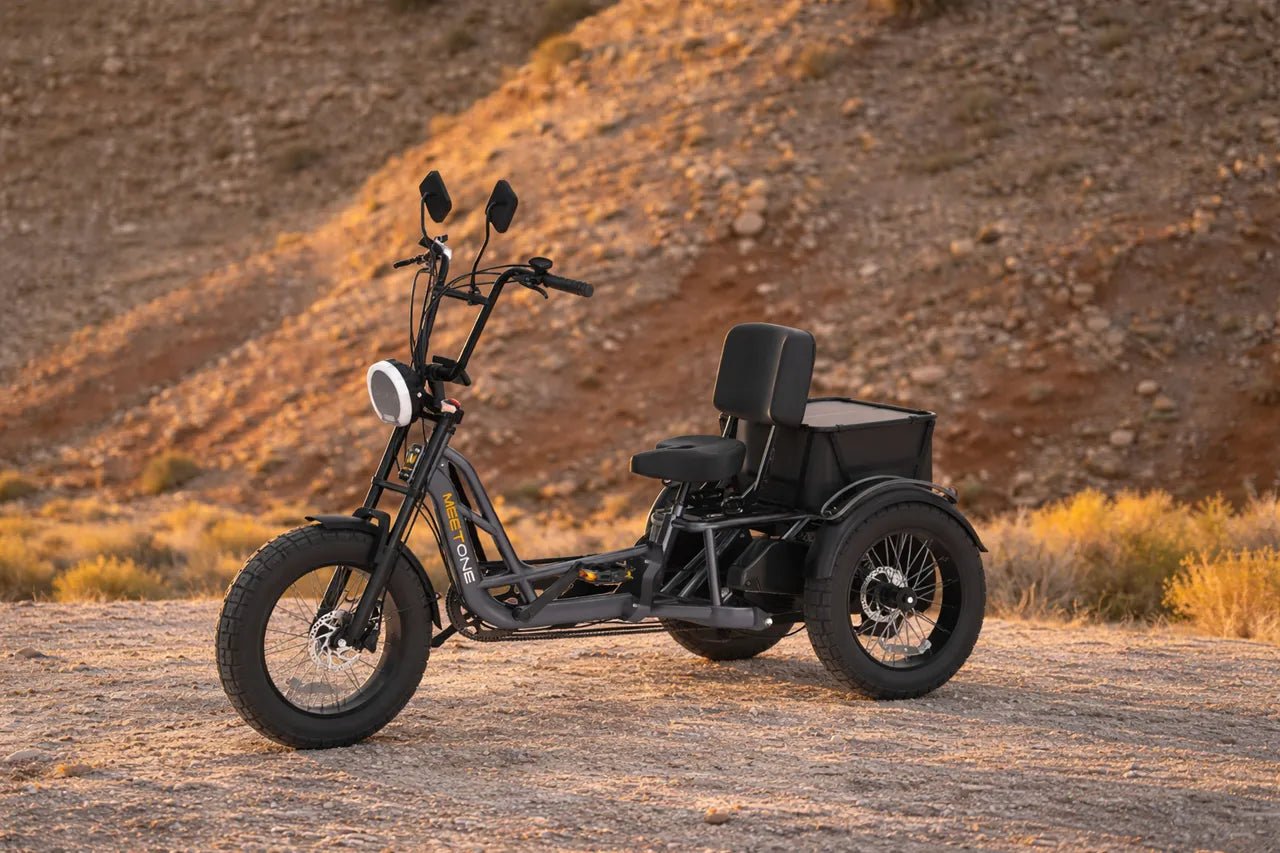
Yes—many seniors successfully ride electric trikes after hip or knee replacement, even with limited strength or mobility.
In fact, electric trikes are often used as a low-impact way to stay active, regain movement, and maintain independence once the initial recovery period has passed.
How and why they work comes down to positioning, stability, and electric assistance.
Why Electric Trikes Work Well After Joint Replacement
After a hip or knee replacement, most doctors and physical therapists encourage low-impact movement. The goal is usually to keep the joint moving without excessive load, sudden force, or balance risk.
Electric trikes fit naturally into that category because they:
- stay upright on their own
- allow controlled, assisted pedaling
- reduce stress on joints compared to traditional bikes
For many seniors, they become a practical alternative to indoor recumbent bikes or gym equipment—only outdoors, in fresh air, and at their own pace.
The Advantage of a Semi-recumbent Position
One reason certain electric trikes are especially popular with post-surgery riders is the semi-recumbent position.
When pedaling out in front of the body instead of straight down:
- the knee and hip move through a more open range of motion
- pressure on the joint is reduced
- riders can fine-tune extension to match their current mobility
Seats are also typically lower to the ground, making mounting and dismounting easier—especially for riders who cannot bend deeply or lift a leg high.
You Don’t Need Strong Knees or Hips to Ride
A common concern is whether you need strong knees or hips to ride an electric trike at all.
You don’t.
Electric trikes are designed so the rider can decide how much work their body does. Depending on your needs, you can:
- pedal lightly with assistance
- use higher assist levels to help move stiff joints
- rely on the throttle and simply move your legs for circulation
This makes electric trikes useful not just for exercise, but for gentle, controlled motion—especially when strength has not fully returned or may never fully return.
Electric Assist as Adjustable Support
Many riders describe electric assist as similar to adjustable gym equipment.
Early on, you might use more assistance to help turn the pedals when strength or flexibility is limited. Over time, if strength improves, assistance can be reduced. If it doesn’t, the trike still remains fully usable.
This adjustability is especially valuable for riders with:
- reduced torque in the knee
- limited hip mobility
- arthritis or post-surgical stiffness
The trike adapts to the rider—not the other way around.
Stability Matters More Than Strength
Another major advantage after hip or knee replacement is stability.
On a two-wheel bike, riders must generate enough force to get moving and stay balanced. That can be difficult—or unsafe—when strength is limited.
On a trike:
- balance is built in
- stopping doesn’t require putting a foot down
- slow speeds feel controlled, not wobbly
This allows riders to focus on movement and comfort rather than fear of tipping over.
What About Riders Who Are Fully Recovered?
Even for seniors who are technically “fully recovered,” joint replacement often comes with some permanent loss of flexibility or strength.
That can make traditional bikes difficult:
- seats may need to be set very high for leg comfort
- mounting and dismounting becomes challenging
- generating enough torque to start can be difficult
Electric trikes remove those barriers while still allowing outdoor activity and independence.
A Quick Medical Note
Every recovery is different. Always follow the guidance of your doctor or physical therapist regarding timing, range of motion, and activity level.
What this article reflects is real-world experience with riders who are past the early recovery phase and looking for a safe, manageable way to stay active.
Final Thoughts
Electric trikes offer seniors a unique combination of stability, adjustability, and low-impact movement—making them a practical option after hip or knee replacement.
You don’t need strong joints.
You don’t need perfect mobility.
You don’t even need to pedal hard.
What you need is a platform that supports where you are today—and lets you ride comfortably on your own terms.

Share:
Best Semi Recumbent Electric Trikes for 2026
Spring Safety Tips for Seniors on Electric Trikes: Post-Winter Prep Guide
1 comment
Estoy interesado en el triciclome podían mandar más información
Precio
Mejoras ets
Etc??