

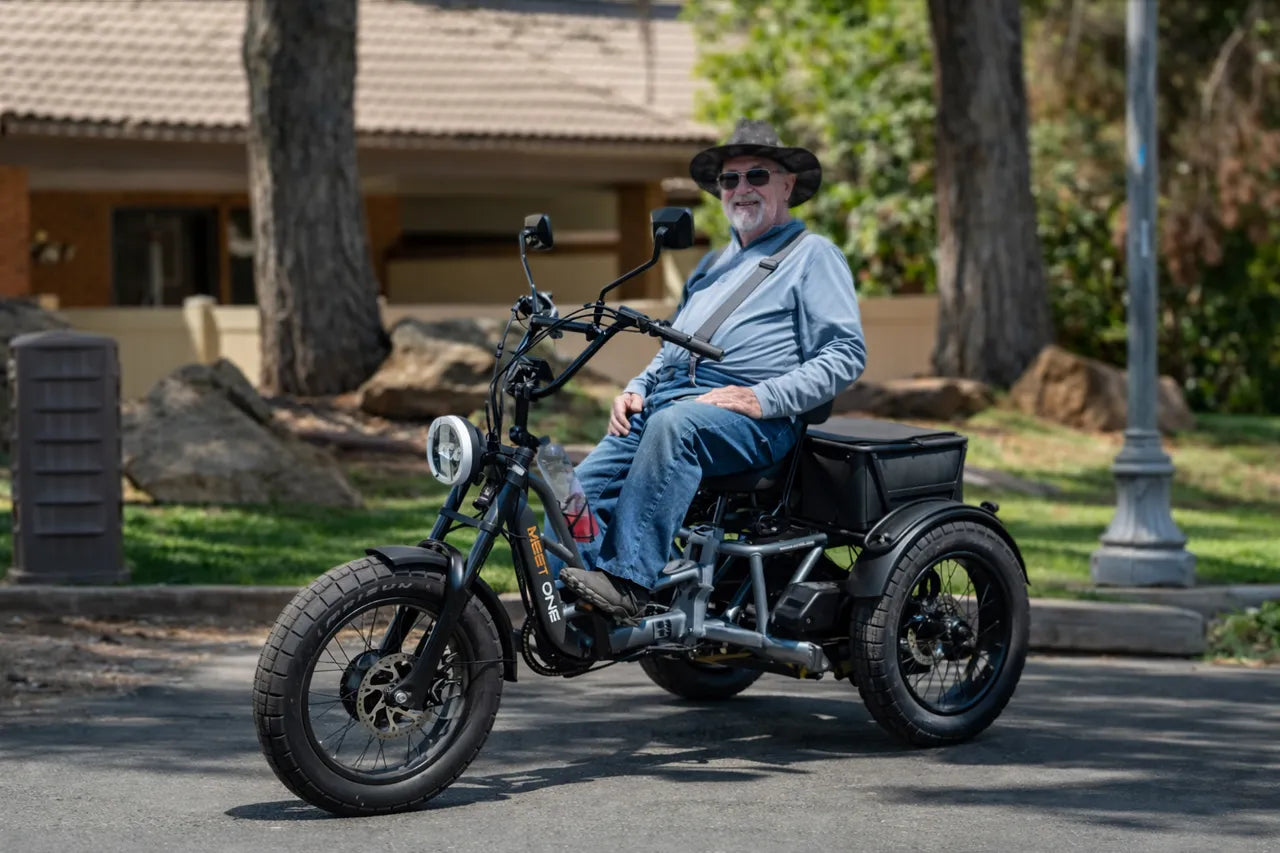
There's something almost instinctive about spring. The air softens, the days stretch longer, and after months of cold, the urge to get outside returns like an old friend.
For seniors who ride electric trikes, spring signals something specific: it's time to ride again. But after a winter in storage, your trike needs a little attention before you head out — and so do you. Road conditions shift in spring, weather can turn unpredictable within a single afternoon, and your body may need a few rides to find its rhythm again.
None of this should feel daunting. A bit of preparation before your first ride makes everything that follows smoother, safer, and genuinely enjoyable.
Post-Winter Inspection: Start Here Before You Go Anywhere
An electric trike stored through winter is not automatically ready to ride in spring. Cold temperatures — anything consistently below 40°F (4°C) — affect battery capacity, tire pressure, and brake cable tension. Before your first spring ride, a 15-minute inspection can prevent the most common post-winter failures.
The three systems that require attention after winter storage are the battery, the tires, and the brakes. Each degrades in a specific way during cold months, and each requires a specific check before you ride.
Battery Check
Cold storage temporarily reduces lithium battery capacity by 10–20%. This is normal and usually recovers within two to three full charge cycles in warmer temperatures.
Before your first spring ride:
- Charge the battery fully before riding — do not test range on a partial charge
- Inspect the charging port and terminals for white or green corrosion
- Make sure the port is clean and fully dry before connecting
- If range feels shorter than expected, complete two or three full charge-and-discharge cycles before drawing conclusions
If the battery does not hold a charge after three full cycles, contact your trike manufacturer. Capacity loss beyond 30% after warm-up cycles may indicate a cell that needs replacement.
Tire and Stability Check
Tire pressure drops approximately 1 PSI for every 10°F drop in temperature. A trike stored through a cold winter may have tires that are 5 to 10 PSI below the recommended level — enough to noticeably affect stability.
Check each tire for:
- Pressure: Inflate to the PSI printed on the tire sidewall (typically 40–65 PSI for electric trike tires)
- Cracking or dry rot: Look along the sidewall for small hairline cracks — a sign the rubber has degraded during storage
- Tread depth: Worn tread increases stopping distance, especially on wet spring pavement
Underinflated tires on a three-wheeled electric trike increase the risk of tipping on uneven surfaces and reduce your control in turns.
Brake and Control Test
Hydraulic disc brakes — the most common brake system on electric trikes — can develop issues during cold storage even when the trike is kept indoors. Brake fluid absorbs moisture over time, and temperature fluctuations can cause seals to contract slightly, leading to a spongy lever feel or reduced stopping power.
Before your first spring ride, inspect the brake system as follows:
If your trike has hydraulic brakes:
- Squeeze each brake lever slowly and firmly — the lever should feel solid and stop well before reaching the handlebar
- Check the fluid reservoir (usually a small translucent tank near the brake lever) — fluid should be visible at the minimum fill line
- Inspect the brake lines and hose connections along the frame for any sign of oil residue or wetness, which indicates a leak
- Walk the trike forward and apply each brake separately to confirm the wheel stops cleanly with no grinding or squealing
- Look at the disc rotors — any deep scoring or uneven wear means the rotor should be inspected by a technician before riding
If your trike has mechanical brakes:
Check that the cables move freely with no stiffness or catching. Inspect the cable where it enters the housing for fraying or rust. If either lever feels sticky or unresponsive, the cable likely needs lubrication or replacement before you ride.
Throttle check (applies to all electric trikes):
Test the throttle in a safe, open area before heading onto the road. It should engage smoothly without sticking at any point in its range, and return fully to zero when released. A throttle that sticks or hesitates is a safety issue that needs to be resolved before riding.
If any part of the brake system feels weak, inconsistent, or different from how it felt last fall, do not ride until it has been inspected by a qualified technician.
What Makes Spring Roads More Dangerous Than Summer Roads
Spring road conditions are more hazardous than they appear. Three specific hazards affect electric trike riders more than other road users.
Wet pavement: Morning dew and spring rain create slick surfaces, especially on painted road markings and metal utility covers. Reduce speed before turns, not during them.
Winter debris: Sand, road salt, and gravel residue accumulates along road edges and at intersections through early spring. This material reduces traction and can cause a front wheel to slip unexpectedly. Stick to the center of paved paths and avoid gravel shoulders.
Low-angle sun glare: With daylight saving time, morning and evening sun sits at a lower angle. Glare on east- or west-facing roads can eliminate your forward visibility for several seconds. Polarized sunglasses and functioning front lights reduce this risk significantly.
What to Wear on an Electric Trike in Spring Weather
Spring temperatures can shift 20 to 25°F within a single day. Clothing that manages that range keeps you comfortable and alert — and an alert rider is a safer rider.
The recommended layering system for senior electric trike riders:
| Layer | Purpose | What to Choose |
|---|---|---|
| Base layer | Moisture management | Lightweight, moisture-wicking fabric |
| Mid layer | Warmth | Light fleece or insulated vest |
| Outer layer | Wind and light rain | Packable wind-resistant jacket |
Beyond layers, these four items belong on every spring ride:
- Helmet — properly fitted, always worn
- Gloves — reduce vibration fatigue and improve grip, especially for riders with arthritis
- Polarized sunglasses — protect against glare and pollen
- Closed-toe shoes — firm sole for stable pedal contact
Overheating causes fatigue faster than cold does. A packable outer layer you can remove and stow mid-ride is more valuable than a single heavy jacket.
How to Return to Riding After Winter Without Getting Hurt
Balance and muscle memory shift after a multi-month break from riding. Most riders feel slightly less confident on their first spring ride than they expect. This is normal and recovers quickly with short, structured practice rides.
A safe return-to-riding progression for seniors:
- Rides 1–2: 10 to 15 minutes, flat surface, familiar route, lowest assist level
- Rides 3–5: 20 to 30 minutes, introduce gentle hills, return to your normal assist setting
- Week 2 onward: Resume regular routes and distance
Choosing a lower assist level for the first few rides is not about physical limitation — it is about giving yourself time to rebuild the automatic responses that make riding feel natural.
Spring Health Factors That Affect Riding Safety
Three seasonal health factors specifically affect senior electric trike riders in spring.
Seasonal allergies cause watery eyes, sneezing, and nasal congestion — all of which reduce your reaction time and forward visibility. If you are prone to spring allergies, take any prescribed medication 30 minutes before your ride rather than managing symptoms on the road.
Dehydration is common in spring because cooler air masks how much your body is working. Drink 8 to 16 ounces of water before a ride and carry water on any ride longer than 20 minutes.
Dizziness or shortness of breath during a ride — regardless of cause — is a signal to stop immediately, move to a safe position away from traffic, and rest before continuing. Do not attempt to ride through either symptom.
Spring Riding Safety: Quick Reference Checklist
Before your first spring ride, confirm each of the following:
Trike inspection
- Battery fully charged, terminals clean and dry
- Tires inflated to the correct PSI, no cracking or dry rot
- Hydraulic brakes: fluid level correct, no leaks, rotors in good condition
- Throttle smooth, engages and returns cleanly
Road awareness
- Check weather forecast before riding
- Plan route on paved, well-maintained surfaces
- Wear reflective gear if riding near dusk
Personal readiness
- Dressed in removable layers
- Helmet, gloves, closed-toe shoes, sunglasses
- No allergy symptoms that affect vision or concentration
- Water available for rides over 20 minutes
The Bottom Line
A well-maintained electric trike is one of the safest and most accessible ways for seniors to stay active outdoors. Spring is the best time to start — but only after a short inspection and a few easy warm-up rides.
The goal is not caution for its own sake. It is confidence built on a solid foundation. Riders who take 20 minutes to prepare before their first spring ride enjoy the season more, ride longer, and stay safer throughout.


Share:
How Seniors Use an Electric Trike After Hip or Knee Replacement
How an Electric Trike Makes Spring Outings Easier for Seniors